
arrow_backBACK TO BLOG
Vocal Recordings & Its terms – Capturing Clear, Powerful & Balanced Sound
Recording vocals in a studio involves more than just microphones and acoustics—it requires a balance of technical expertise and performer comfort. While proper equipment, room treatment, and recording techniques are essential, creating an environment where the singer feels relaxed and confident is equally important. The best vocal performances often come from artists who are comfortable enough to focus on expression rather than the recording process itself. By combining technical precision with a supportive atmosphere, engineers can capture clear, professional-quality vocal recordings that sound both polished and emotionally engaging.
Which type of microphone to chose ?
Condenser microphones are the standard choice for most studio vocal recordings because they capture greater detail, clarity, and vocal nuance. However, they are more sensitive to room noise and require a well-treated recording environment.
Dynamic microphones are less sensitive, making them ideal for untreated rooms, noisy environments, and powerful vocal styles. They also help reduce unwanted room reflections and background noise.
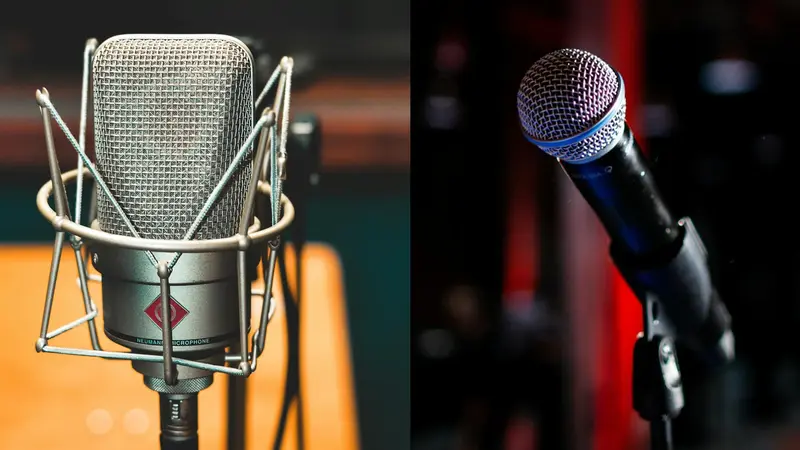
In short :
- Treated studio + clean vocals: Choose a condenser microphone.
- Home studio with room noise or poor acoustics: A dynamic microphone may produce better results.
- Aggressive rock, metal, or broadcast-style vocals: Dynamic microphones are often preferred.
- Pop, singer-songwriter, classical, and detailed vocal work: Condensers are usually the standard choice.
Setting up the Microphone :
Microphone placement and gain staging are critical for capturing clean, professional vocals. Position the microphone approximately 6–10 inches from the vocalist, moving it slightly closer for softer performances and farther away for louder, more powerful vocals. Angle the microphone slightly off-axis to help reduce plosive (“P”) and sibilant (“S”) sounds, and always use a pop filter to minimize unwanted bursts of air.
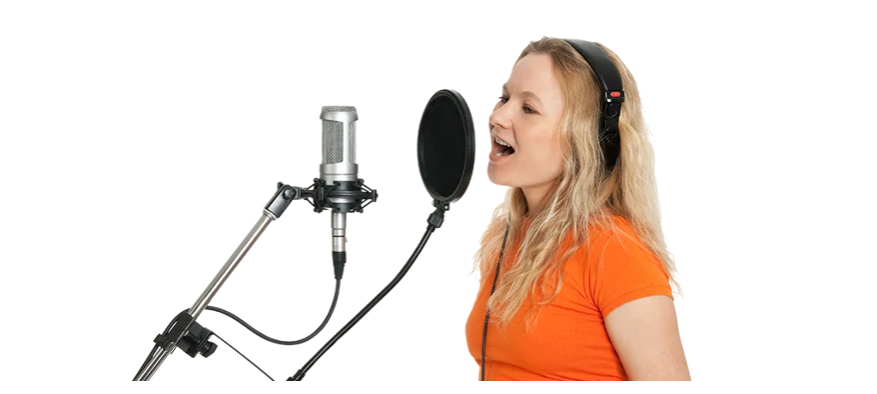
Proper gain staging is equally important. Set the input gain so that vocal peaks typically reach between -10 dB and -6 dB, providing sufficient headroom while maintaining a strong signal. Avoid recording too hot, which can cause irreversible digital clipping, or too low, which may introduce noise when the signal is amplified later. The goal is a balanced recording level that captures the vocal clearly, consistently, and naturally.
Headphone Mix
A well-balanced headphone mix is essential for a great vocal performance. The singer should hear their voice clearly and comfortably, with a touch of reverb to enhance pitch perception and emotional delivery. Keep the backing track present but not overpowering, ensuring the vocalist can hear themselves without strain. Maintain low latency—or use direct monitoring—to provide a natural monitoring experience that allows the artist to perform confidently and stay connected to the music. A poor headphone mix often leads to a poor performance.
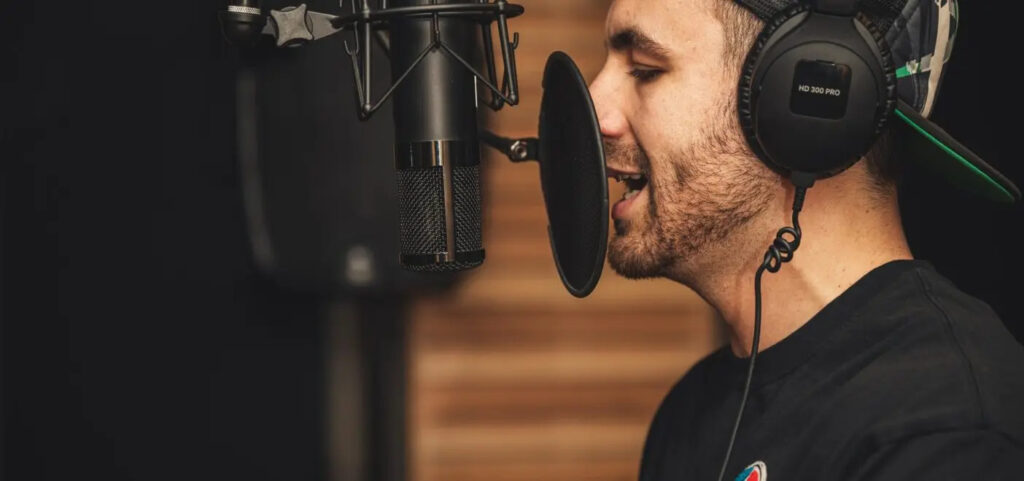
Equally important is controlling unwanted noise in the recording environment. Eliminate distractions by turning off fans and air conditioners when possible, silencing phones, minimizing clothing rustle and chair movement, and keeping water nearby to reduce mouth noise. Attention to these details helps ensure clean recordings and reduces the need for retakes.
Vocal takes and its terms
Lead Vocals : Lead vocal recording is the process of recording the main vocal performance that carries the song’s primary melody and lyrics. It is the central vocal track that listeners focus on and is typically placed prominently in the mix.
Harmony : Harmony vocals sing different notes that complement the melody and create pleasing musical chords. Vocal parts sung alongside the main vocal melody to add depth, richness, and emotion to a song.
Doubling : Doubling is the technique of recording the same vocal part multiple times and layering the recordings together. This creates a fuller, thicker, and more powerful vocal sound while adding depth and width to the performance.
Stacking : Stacking is a process of recording and layering multiple vocal tracks—such as lead vocals, harmonies, doubles, and backing vocals. Unlike simple doubling, which typically involves repeating the same vocal part, stacking can include several different vocal layers sung at various pitches, octaves, or harmonies.
Comping : Comping (short for composite recording) is the process of creating a final vocal track by selecting and combining the best parts from multiple recorded takes. Comping allows you to retain the best pitch, timing, emotion, and clarity from each take, resulting in a polished and professional vocal recording without requiring a perfect performance from start to finish in a single take.
Punch-in recording : Punch-in recording is a technique used to re-record a specific section of a vocal without recording the entire performance again. When a mistake occurs in a particular word, phrase, or line, replacing only that section while keeping the rest of the original take intact.
Ad-libs : Ad-libs are spontaneous or additional vocal phrases, words, sounds, or improvisations added around the main vocal performance to enhance energy, emotion, and personality. Such as extra words or phrases between lyrics, Vocal runs and riffs Shouts, exclamations, and responses.
To know more about vocal recording, its techniques and mixing ideas, visit Soundpoint Pro.
Soundpoint Pro specializes in providing a short 3 months course on studio Engineering, were you will learn about recording, editing, mixing & mastering of professional songs and music. Soundpoint Pro is leading Sound Engineering & Music Production institute in Chennai
Sound Engineering Course in Chennai, Music Production Course in Chennai, Sound Engineering Institute in Chennai, Music Production Institute in Chennai, Audio Engineering Course, Audio Production Course, Recording Engineering Course, Studio Recording Course, Mixing and Mastering Course, Live Sound Engineering Course, Music Production Training, Sound Engineering Training, Audio Engineering Training, Music Production Classes, Sound Engineering Classes, Sound Design Course, Foley Recording Course, Sound Effects Course, Pro Tools Training, Music Programming Course, EDM Production Course, Professional Sound Engineering Course, Best Sound Engineering Institute in Chennai, Best Music Production Institute in Chennai, Sound Engineer Course Chennai, Music Producer Course Chennai.